How Can Teachers Adapt Artbased Centers for Different Age Levels
I love instruction fine art to children. My philosophy is quite simple:To appoint, inspire and teach art with age-appropriate techniques and subjects. I've only been pedagogy art to children for eight years simply it feels like I've been educational activity my whole life. I remember what I was attracted to as an artistic child: how-to-draw books, colorful illustrations and fine art supplies (particularly the jumbo pack of Crayola Crayons with the built-in sharpener). I keep these things in mind when I'1000 front and center amongst xxx kids. Over the years, I have tried many techniques and establish some more effective than others.
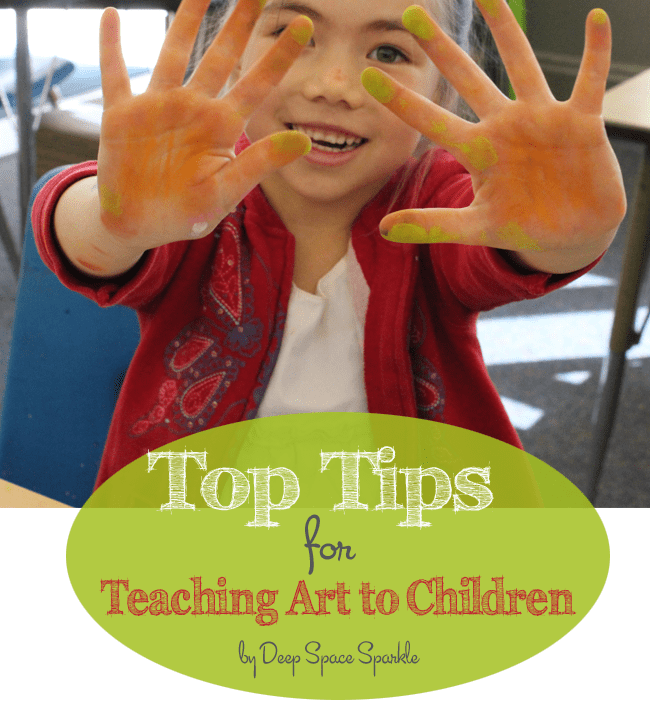
Here is my listing of top 8 tips for teaching art to children:
#1 Ban pencils and erasers.
Sounds harsh, right? I rarely use pencils and erasers in my classrooms with the exception of a few lessons for upper grades. The reason is purely applied: pocket-size pencil leads encourage small drawings. If a kinder is drawing a portrait and and so is required to paint that very portrait, using a pencil will surely atomic number 82 to frustration. It's hard to pigment tiny eyes! In that location is another reason: pencil markings tin be erased, which leads to 2d guessing, which leads to lots of eraser activity, which leads to course being over before the child has anything on his paper. Using oil pastels and/or markers allows the artist to move quickly, commit to the cartoon and forgive their "mistakes". This is a big function of fine art for me; giving into the process and not worrying well-nigh the details.
#2 Mix paint onto newspaper, and non in paint palettes.
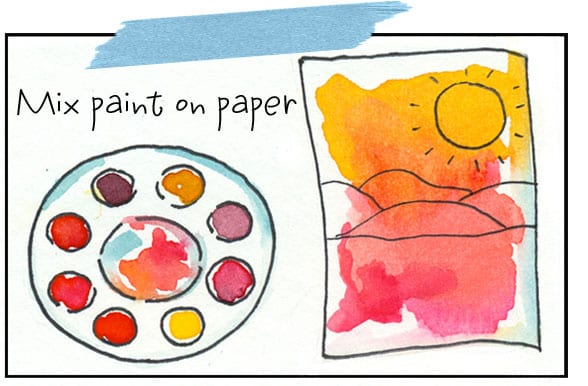 Requite a child paint and an private palette and they can spend hours mixing paints to find the perfect colour. If you take all the fourth dimension in the world, and so past all means do so! Simply if you lot are in a classroom setting, with 30 kids and a brusque corporeality of time, encourage the children to mix paints on their newspaper. Utilise the double-loading technique when you tin can. Information technology produces very absurd results and make clean-up is much easier!
#3 Forgo art smocks and aprons
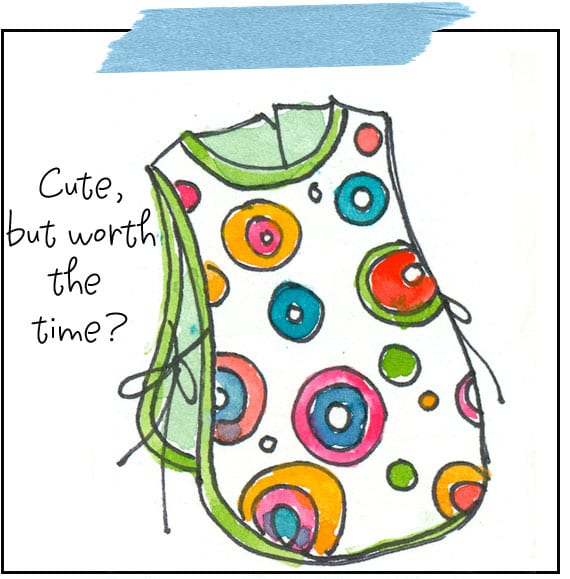 Gathering art smocks, getting them on, storing them, organizing them, etc. takes time. Sometimes by the time the children get their smocks on and get seated, 5-seven minutes of a 30-infinitesimal art class is gone. Get 'em in, get 'em settled and begin the fun stuff. I swear by Oxiclean, too. A skillful soaking in this powerful stuff can wipe out most stains.
#4 The ten-minute quiet time
Subsequently instructions are given, the paper handed out and the children are engaged in their project, brainstorm a ten-minute tranquility fourth dimension. This is their time; the hazard to reflect on their work, the opportunity to lose themselves in their fine art, and peradventure the nearly important of all, the permission notto speak to their best friend. This repose-time method only works if there is no transition involved. If the children are on day 3 of a project, I can expect that they will finish up at different times. Helping them transition to a new project or free-choice activity is not going to piece of work during placidity-fourth dimension.
#5 Learn how to draw well and brand mistakes
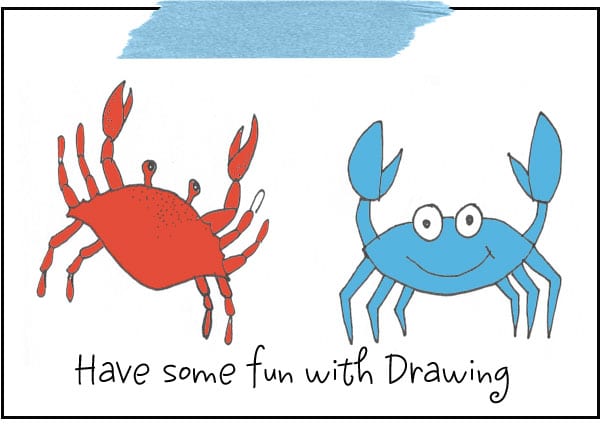 This is a fun one. I dear to draw and demonstrating simple drawings for my students really helps them engage with the lesson when teaching art. I requite lots of examples and so if we are doing a lesson on chameleons, I draw a few different ones; some realistic, some featherbrained, some animated. In the process of drawing on the white board, I e'er incorporate mistakes. E'er. I laugh at my "mistakes", tell the kids to expect them and then I prove them how to plow mistakes into something else. I include many how-to-draw sheets in my PDF fine art lesson plan booklets. These are more often than not for the teachers (non necessarily for the kids). I retrieve it's critical that you show your artistic side, no matter what you think of it, and inspire yourstudents. You can do it!
#six Pick fun subjects
You probably know this past now, but I think its imperative that y'all chose the subject field of your art lessons advisedly. I want my students charging into the art room anticipating a fun lesson and begetting a can-practice attitude. I dear watching their faces as they look at my white board to catch a glimpse of the next fine art lesson. Often, kids will grinning and say, "Oh, that looks hard!" but I know from their expressions that they know they volition be able to exercise information technology. They have confidence! And if they take that, you have an eager and engaged oversupply.
#seven Apply ane/2 sheets to save fourth dimension
I use the standard 12″ x 18″ drawing paper for about projects but if you cutting that paper in half, children can complete the projection in much less time. Not only does it salve time, just information technology saves on supplies likewise. All my projects can be done on smaller sheets, so don't feel by using a smaller paper size you are compromising.
#8 Outline, outline, outline
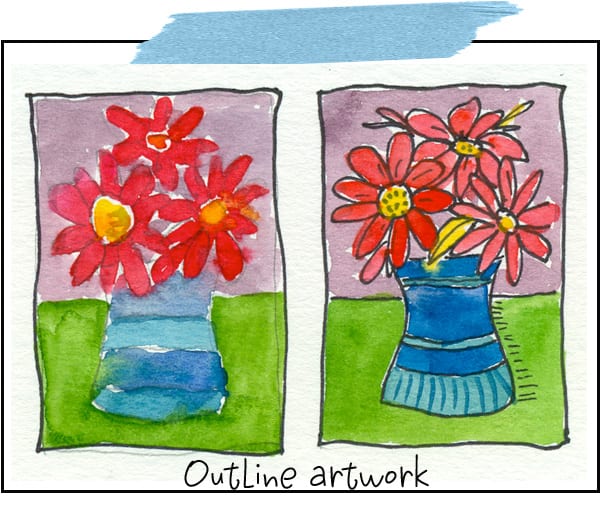 The flim-flam to making an art projection wait completed is to teach how to outline and add contrast to children. I've talked about outlining before and it'due south because it really makes the art pop. Recall of how often Matisse outlined his work. If y'all are doing a drawing in pencil then decide to paint with watercolors, it's really difficult to keep the contrast unless at that place is a nighttime line in there somewhere. Use a sharpie waterproof blackness mark, oil pastel or even black paint and a small castor. Information technology really makes a deviation. And it doesn't always have to be black…try a blue or even a ruby-red. Cool.
Now, information technology'south your turn…what are your best tried and true tips?
Download our costless management, set-up, drawing & painting guide, to help yous when education art from your home!

Source: https://www.deepspacesparkle.com/top-eight-tips-for-teaching-art-to-children/
0 Response to "How Can Teachers Adapt Artbased Centers for Different Age Levels"
Postar um comentário